
Best AI Task Management Software for Business
AI Task Management Software helps businesses and organizations streamline their operations using advanced AI-powered technology. It automates complex tasks, improves accuracy, and provides data-driven insights to enhance productivity and decision-making. With features like automation, real-time analytics, workflow management, and seamless integrations, AI Task Management Software enables teams to reduce manual work, save time, and improve overall efficiency. On SoftwareAdviser.ai, you can explore, compare, and choose the best AI Task Management Software solutions that fit your business needs and help you scale faster with the power of AI.
 Researched and Written by Akash Patel
Top 3 Featured Softwares

List of 20 Top Task Management Software | Get A Demo, Pricing & Reviews
Get Free Consultation



What is AFAS Software? AFAS Software is a Netherlands-based ERP (Enterprise Resource Planning) platform that helps organizations manage their essential business operations withi...
View Profile

Quickbase

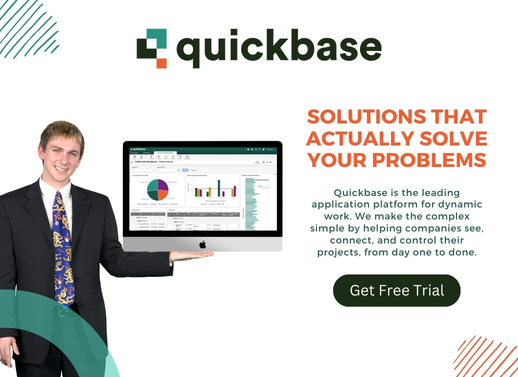
Meet Quickbase AI! The future of dynamic work is now
Quickbase connects your current systems with important contributors to assist your team in minimizing risk, cutting down on waste, and minimizing unforeseen expenses. The appropria...
View Profile

ClickUp is a comprehensive, all-in-one productivity platform designed to streamline work management for individuals and teams across industries. It centralizes project planning...
View Profile

Google Workspace
The better way to work
Google Workspace is an intuitive platform that helps teams of all sizes to connect and collaborate with each other and improve their efficiency levels in real-time. It provides an ...
View Profile

What is Monday.com?Monday.com is a cloud-based Work Operating System (Work OS) designed to help teams plan, track, and manage their projects and workflows efficiently. Its high...
View Profile
Cerri
Enterprise Project Portfolio Management Software
Cerri provides simple yet powerful team collaboration and project management solutions to improve project workflow, and align teams towards common goals.
View Profile

Smartsheet is a cloud-based work control and automation platform designed to help businesses plan, tune, and execute tasks successfully. It combines assignment control, collaborati...
View Profile

Connecteam
Powerful Hubs, Flexible Pricing
What is Connecteam?Connecteam is a mobile-first employee management software designed to simplify and centralize daily operations for deskless and remote teams. It offers tools...
View Profile

Asana is a cloud-based project management software designed to help teams organize, track, and manage their work efficiently. It streamlines workflows, improves collaboration, ...
View Profile
Wrike is a powerful cloud-based project management and collaboration software designed to streamline workflows, improve team productivity, and enhance visibility across project...
View Profile

What is Trello?Trello is a flexible, web-based project management tool that helps individuals and teams organize their tasks visually. Based on the Kanban method, Trello uses b...
View Profile

What is BasecampBasecamp is a popular project management and team collaboration tool designed for simplicity. It helps businesses organize tasks, communication, and files in on...
View Profile
What is Teamwork?Teamwork is a challenge management and collaboration software program designed to help teams prepare duties, control initiatives, and enhance productivity. Ide...
View Profile

Hitask is an advanced task management software which helps enterprises to gain complete control over multiple projects and get individual tasks assigned to dedicated employees in r...
View Profile
Notion is an all-in-one workspace designed for note-taking, task management, project collaboration, and knowledge organization. It combines multiple productivity tools—such as do...
View Profile

Todoist is an efficient task organizer that enables its users to keep track of their projects, tasks, and goals from a single easy to use interface. The software syncs across all t...
View Profile

Any.do is a work management solution that helps businesses organize tasks, to-do lists, and reminders with ease. It comes with a to-do list manager module that allows users to orde...
View Profile

What is AirtableAirtable is a cloud-based platform that combines the simplicity of a spreadsheet with the functionality of a database. It helps teams organize, collaborate, and man...
View Profile

Microsoft To Do is a popular tool that provides an easy-to-use platform for managing all to-do lists in a systematic and effective way. It’s available for free and syncs across...
View Profile

Centripe
The only CRM solution every marketing agency needs
Centripe AI is an advanced AI-powered decision intelligence platform that empowers businesses to transform raw data into actionable insights. By combining artificial intelligen...
View Profile
Table of Content
Finding the best AI task management software in the fast-moving industry of today in the US can feel overwhelming. With American teams confronting a burden like never before and a new landscape of a hybrid environment, classic to-do lists just won’t cut it anymore. Smart solutions today go beyond tracking deadlines; they actively manage your day by detecting bottlenecks, automating routine procedures, and scheduling jobs based on your actual behaviors. Whether you're a Silicon Valley startup ramping up operations or a remote workforce looking for better alignment, using the proper AI technology is no longer a luxury; it’s your ultimate competitive advantage for efficiency.
1. What Problem Should AI Task Management Software Solve First?
The most important challenge AI task management software needs to solve initially in the fast-paced US industry is dynamic prioritization. Traditional task management systems are passive and static repositories where users manually add data and arbitrary deadlines. A lot of friction results from this. Humans are prone to recency bias, overestimating urgency, and having difficulty managing cross-functional relationships. AI software should be a dynamic “intelligent prioritization engine” that considers deadlines, task complexity, past team velocity, and evolving business objectives. Rather than a static list, AI creates a living and breathing portfolio, and American enterprises can concentrate on execution rather than hours of manually moving calendars around.
Also, this key skill tackles the common challenge of information overload and staff burnout head-on. In the United States, hybrid teams are inundated with notifications, AI email finder tools, and changing market needs; a good AI platform should be able to automatically estimate capacity and balance workloads. With a knowledge of a person’s history data and personal energy habits, the software may preemptively indicate bottleneck threats before a project goes off the rails. The first game-changer is solving the prioritization challenge. It transforms the position of a project manager from mundane governance and administrative busy work to high-impact, strategic decision-making.
2. Which AI Task Management Software Features Matter Most for Workflow and Visibility?
1. Intelligent prioritizing Engine: Static, manual to-do lists rapidly grow stale, but an intelligent prioritizing engine constantly considers the urgency of tasks, the band’s capacity, and the changing direction of company goals. It automatically reorganizes daily dashboards for each team member such that the greatest impact work always happens first. No management intervention is required.
2. Predictive Workflow Automation: Real visibility implies repairing a process before it breaks. Predictive AI workflow automation features analyze your prior project data to automatically route activities, assign sub-tasks, and trigger approvals. It detects and prevents project management pitfalls before they happen, ensuring smooth operations behind the scenes.
3. Burnout is a big contributor to turnover in the US market: Real-Time Capacity Planning and Workload Balancing. Advanced workload balancing capabilities use real-time data to visually map each team member’s bandwidth. When an individual is overallocated, the AI will automatically recommend modifications in job allocation, providing real-time capacity planning that preserves your team’s mental health while delivering on time.
4. Automated Mapping of Cross-Functional Dependencies: When a project crosses numerous departments, including marketing, product, and sales, visibility can quickly drop. AI capabilities automatically map cross-functional linkages to track the impact of a delay in one department on another. The algorithm immediately finds out these hidden links, refreshing timeframes across the entire organization, so everyone is properly aligned.
5. Predictive Bottleneck Alerts and Risk Forecasting: It’s a huge visibility failure to discover a project is in jeopardy after a deadline is missed. AI capabilities employ machine learning to examine existing workflows for high-risk tasks. Teams may proactively pivot and allocate extra resources where they are required most, by alerting management to impending slowdowns days before they materialize.
6. High Visibility Requires Frictionless: Updates in Centralized Activity Feeds and Natural Language Processing (NLP) Task Creation. Users can use NLP-powered features to write in unstructured thoughts (e.g., “Remind me to review Sarah’s design wireframes by Thursday morning”) and automatically translate them into organized, trackable activities. By using an AI-synthesized, centralized activity feed, leadership can get a high-level snapshot of organizational development in seconds, rather than having to dig through countless threads.
3. How well does AI Task Management Software fit our Current Tech Stack?
API maturity and native ecosystem compatibility will determine if AI task management software will fit into your existing US enterprise tech stack. Modern AI systems are designed to sit on top of your existing investments in Slack, Microsoft Teams, and other tools, not to replace them. These smart layers, with advanced NLP task automation, can absorb unstructured data straight from your everyday communication channels and turn chat threads into work items, all without requiring employees to shift context. The aim is to connect isolated data silos to deliver uniform cross-departmental visibility, so that the AI can scan your whole operational architecture and easily map cross-functional connections across legacy systems.
When you’re hooked up, the AI turns your static tech stack from a jumbled collection of record-keeping tools into an active ecosystem driven by resource optimization analytics. Instead of asking you to manually copy data, the platform functions as a centralized brain that pulls live updates from your developer pipelines, AI CRM updates, and marketing calendars. This constant stream of data feeds your intelligent prioritizing engine and gives you actual, real-time capacity planning across all departments. It draws on the data of your existing stack and can precisely compute workload balance and generate predictive risk forecasting alarms, discovering project management bottlenecks before they damage your larger business architecture.
4. Does AI Task Management Software meet US Security and Compliance Needs?
Meeting tough US security and compliance standards is a key priority for modern enterprise-grade AI task management software manufacturers. Built to meet the highest standards such as SOC 2 Type II, HIPAA, and FedRAMP, best-in-class platforms are driven by the highly regulated American industries of healthcare, finance, and defense. Enterprise procurement teams are quite selective with these technologies such that critical company data is segregated, encrypted at rest and in transit using protocols such as AES-256, and governed by rigorous role-based access boundaries. Plus, vendors are keen to provide data residency choices that ensure information is held within US borders, and thus compliance issues are addressed while an organization’s valuable operating history is protected from unwanted exposure.
Airtight data-governance solutions that prevent the exploitation of corporate data are key to the junction of security and advanced AI features. Sophisticated systems that use an intelligent prioritization engine or that execute predictive workflow automation processes huge volumes of unstructured corporate communications. To ensure this is safe, compliance software has stringent “Do Not Train” regulations, providing you with the legal assurance that your proprietary data, prompt logs, and system metrics will not be utilized to train public large language models. This baseline of compliance ensures that as the software identifies cross-functional dependencies, tracks project management bottlenecks, and aggregates data for resource optimization analytics, you gain cross-departmental visibility without regulatory risk or compliance vulnerabilities.
5. How easy is AI Task Management Software for Teams to Adopt?
1. NLP Task Automation for Frictionless Onboarding: The quickest way to destroy product adoption is a steep learning curve. Intuitive NLP task automation means that new users can create a project without having to explore complex menus or fill out lengthy forms. They may just type natural statements into their daily workflows: “Assign the Q3 marketing brief to Sarah by Friday.” The system creates the task structure in a flash, making the product exceptionally easy to deploy from day one.
2. Invisible Value with Predictive Workflow Automation: Teams want solutions that actively help them save time instead of adding to their administrative burden. Predictive workflow automation does its quiet work in the background, automatically routing, assigning tasks, and updating calendars. When employees see the program doing the boring busywork for them, resistance goes away and daily engagement skyrockets.
3. Less Friction with an Intelligent Prioritization Engine: Change management is tough when staff are drowning in data noise from a new technology. Through a sophisticated prioritization engine, we cut through the cacophony and provide a clear, personalized daily agenda that is just right for each user’s bandwidth. This program establishes instant trust with individual contributors by minimizing option fatigue and giving a clear guide of what to work on next.
4. Proactive Workload Balancing Without Managerial Friction: Employees frequently resist management tools for fear of micromanagement. But AI platforms utilize workload balance metrics to protect teams, not to regulate them. The software transparently does real-time capacity planning, so it can minimize burnout by indicating when a team member is overburdened. Employees readily embrace the software when they see it aggressively defending their work-life balance.
5. Instant Cross-department Visibility for Leadership: For executive stakeholders, the secret to adoption success is the clarity of the organization’s data. The program automatically brings segregated teams together, creating cross-departmental visibility. Automated dependency mapping allows leaders to instantly see the cross-functional dependencies at a macro level without dragging team leads into never-ending status update sessions.
6. Predictive Risk Forecasting: Enabling Teams when a project confronts a project management bottleneck, teams normally scramble in a high-stress atmosphere. Predictive risk forecasting and resource optimization analytics in AI task management software can detect delays long before they happen. The technology is a must-have that teams genuinely want to use, because it transforms stressful, reactionary crises into calm, manageable course corrections.
6. Can AI Task Management Software Scale as our Business Grows?
- Scalable Intelligent Prioritization Engine: Automates processing of thousands of new incoming tasks across exponentially rising portfolios, ensuring individual and team-level dashboards are not cluttered, and are prioritized correctly to high-level corporate objectives.
- Dynamic Workload Balancing + Real-Time Capacity Planning: Automatically scales to your headcount, tracking cross-departmental bandwidth to dynamically balance resources and prevent widespread staff burnout.
- Automated Dependency Mapping: Across Complicated Hierarchies: Quickly address complicated cross-functional dependencies by mapping relationships across hundreds of simultaneous projects, maintaining visibility as activities scale.
- Predictive Risk Forecasting: Avoid Project Management Bottlenecks uses sophisticated machine learning to continuously model scenarios and alert leadership to potential project management bottlenecks weeks before they affect enterprise milestones.
- Enterprise-Wide Cross-Departmental Visibility: Brings data from newly introduced tools and teams into a single view with NLP job automation to preserve friction-free communication throughout the whole business.
- Advanced Resource Optimization Analytics: Offers executive stakeholders in-depth data insights into asset allocation, budget consumption, and team velocity, and converts raw enterprise growth data into well-defined, actionable business strategy.
7. What ROI can we expect from AI Task Management Software?
1. Direct Cost Reductions and Resource Optimization Analytics: Automates data aggregation, optimizes resource use, and removes human data re-entry, significantly reducing operational overhead by 15 percent to 20 percent.
2. Remove Project Management Bottlenecks: Reduce the danger of catastrophic project delays, enabling teams to achieve a 25% acceleration in delivery timelines and launch corporate initiatives ahead of schedule.
3. Frictionless Handoffs via Predictive Workflow Automation: Automates routine task routing, status reports, and approval loops, reclaiming crucial hours each week for high-value strategy execution.
4. Predictive Risk Forecasting for Better Risk Mitigation: Uses powerful machine learning to conduct proactive scenario models, saving thousands of dollars by recognizing scope creep and resource deficiencies weeks before they hit the bottom line.
5. Real-Time Capacity Planning: Boosts output by tracking live data to ensure a balanced workload in developing enterprise divisions, thus minimizing staff burnout and the resulting turnover costs.
6. Consolidated Overhead with Cross-Departmental Visibility: Merges many siloed, department-specific tracking technologies into one intelligent layer, saving SaaS license costs and providing leadership with clear operational visibility.
8. What are the Top AI Task Management Software Solutions Available in the US Market?
1. ClickUp
An extremely customizable all-in-one productivity suite that brings together docs, chat, and tasks. A unified AI brain to solve app fragmentation and automate daily standups across scaling teams.
- Features: Contextual workplace search, pulling answers from chat threads and documentation. AI-generated standups, sprint summaries, and role-specific writing helpers. AI Fields that update custom project data automatically from the text of the tasks.
- Pros: Highly customisable and packed with capabilities for the price; deep contextual memory that spans your whole workspace history.
- Cons: The interface can be crowded and visually overwhelming for non-technical users; building up unique workflows involves a longer initial learning curve.
2. monday.com
The Work OS graphically empowers teams to run their projects and workflows with confidence. Its no-code AI helper lets teams design complicated workflow automations and risk-forecasting dashboards.
- Features: AI Formula Builders that write complicated backend logic from normal English text inputs. Predictive risk map that shows probable milestone delays based on the velocity of the team.
- Pros: Very intuitive visual interface, high team adoption; strong, fluid automated workflows that don’t require IT assistance.
- Cons: Minimum of three seats on standard plans; advanced reporting, deep automations, and time-tracking tools are all paywalled behind higher pricing tiers.
3. Google Workspace
The cloud collaboration standard, with Gemini AI built into Gmail, Docs, and Sheets to make it even better. It’s good at taking meeting transcripts and email conversations and turning them into action items without users having to adopt a new interface.
- Features: Automates task tracking by collecting action items straight from Google Meet transcripts and email threads. On-demand project tracking trackers built with contextual side panels in Google Sheets. Intelligent scheduling bots that maximize calendar blocks according to team availability.
- Pros: No friction for enterprises already deeply integrated with the Google ecosystem. Strong NLG and translation are built into routine communications.
- Cons: Lacks the usual, dedicated project management features such as built-in Gantt charts, complicated workload balance views, or complex agile sprint boards.
4. Quickbase
A powerful low-code platform for enterprise databases for sophisticated operational and supply chain tracking. With its AI, you can build apps from start to scale and customize, with simple text prompts.
- Features: Intelligent builder assistants that build full custom database applications from plain text prompts. Predictive analytics for resource optimization to anticipate complex supply restrictions in pipelines.
- Pros: Tremendous database scaling capabilities to handle thousands of bespoke data associations. Excellent enterprise-grade security and compliance.
- Cons: Very costly total cost of ownership that targets enterprise budgets; overkill for teams that just want to manage conventional task checklists or simple content calendars.
5. AFAS Software
An ERP-centric enterprise suite that embeds daily task management directly into the company's financial, HR, and payroll procedures. It is built for rigid back-office consolidation, not for flexible creative project planning.
- Features: Seamlessly and intelligently ties work completion to automated invoicing, payroll, and procurement pipelines. AI-powered workflow routing of admin chores to maximize utilization of internal resources. Automated data consistency audits for inter-departmental business procedures.
- Pros: Bridges the gap between job execution and company financial accounting; ideal for firms looking for full back-office consolidation.
- Cons: Very tight framework, with very little possibility for creative or agile ad-hoc task planning. Interface feels very strongly administrative and corporate.
9. Which AI Task Management Software Best fits our Budget and Goals?
We have classified the top AI task management software solutions by specific use cases and spending profiles to allow us to provide you with the most accurate advice for the US market.
|
Software |
Base Pricing (Annual Billing) |
AI Cost Add-On |
Best For (Strategic Goal) |
Primary Operational Focus |
|
ClickUp |
$7 / user/month |
+ $9 / user/month |
App Consolidation & Feature Depth |
Unifying tasks, docs, and team chat into a single, high-value AI workspace. |
|
monday.com |
$9 / user/month (3-seat min.) |
Included in Upper Tiers |
Cross-Department Visibility |
Visual dashboard tracking, high team adoption, and no-code workflow automation. |
|
Google Workspace |
$6 to $18 / user/month |
+ $20 / user/month (Gemini) |
Zero-Friction Workflow Integration |
Managing tasks directly inside your inbox, Docs, and Meet without a separate platform. |
|
Quickbase |
Custom Enterprise (Starts ~$8,500/yr) |
Custom Enterprise Tier |
Bespoke Database App Building |
Tracking heavy operational data (supply chain, construction) via text-to-app AI. |
|
AFAS Software |
Custom Enterprise Pricing |
Custom Enterprise Tier |
ERP & Back-Office Hardwiring |
Linking daily project tasks directly to automated corporate payroll, HR, and accounting. |
Core Selection Guide:
- If you’re looking for the most AI productivity tools for the lowest membership price, then ClickUp is your answer.
- Go with monday.com if you are heading a cross-functional corporate team that demands clear, visible dashboards and speedy onboarding.
- Go with Google Workspace if you wish to avoid typical project management boards entirely and manage tasks via email and AI chat.
- If your firm deals with significant logistics, has custom supply chain databases, or requires rigorous backend accounting, then consider Quickbase or AFAS Software.
10. Conclusion
Picking the right AI task management software is more than just tracking deadlines. It’s about determining how your organization runs, automates and scales in a competitive US market. Whether you require an autonomous daily calendar optimizer, an all-inclusive linked workspace, or a heavy-duty enterprise database engine, the correct platform transforms your operational data into a strong asset. To successfully negotiate this decision process and develop a perfectly integrated workflow, let our specialized software advice service assist your deployment. We deliver personalized, independent insights to fit your unique technology stack, compliance goals, and budget.
